Where new users get stuck before the aha moment
Five products, five places the first task fell apart, and the two weeks I spend finding the sixth
· 5 min read · Nikita Miezhenski
The aha moment is the first time a product does the thing someone came for. In an AI agent platform it is the first agent that answers a real message. In an analytics assistant it is the first chart that matches what the manager meant. In a nutrition practice it is a call booked with someone who will pay. Everything before that moment is a cost the new user pays on credit, and most of them stop paying somewhere along the way.
I have now watched that path fall apart in five products I worked on, and it fell apart in the same few places each time. Here they are, with what I did about them, and then the two weeks I spend finding the sixth.
A setup that needs an engineer
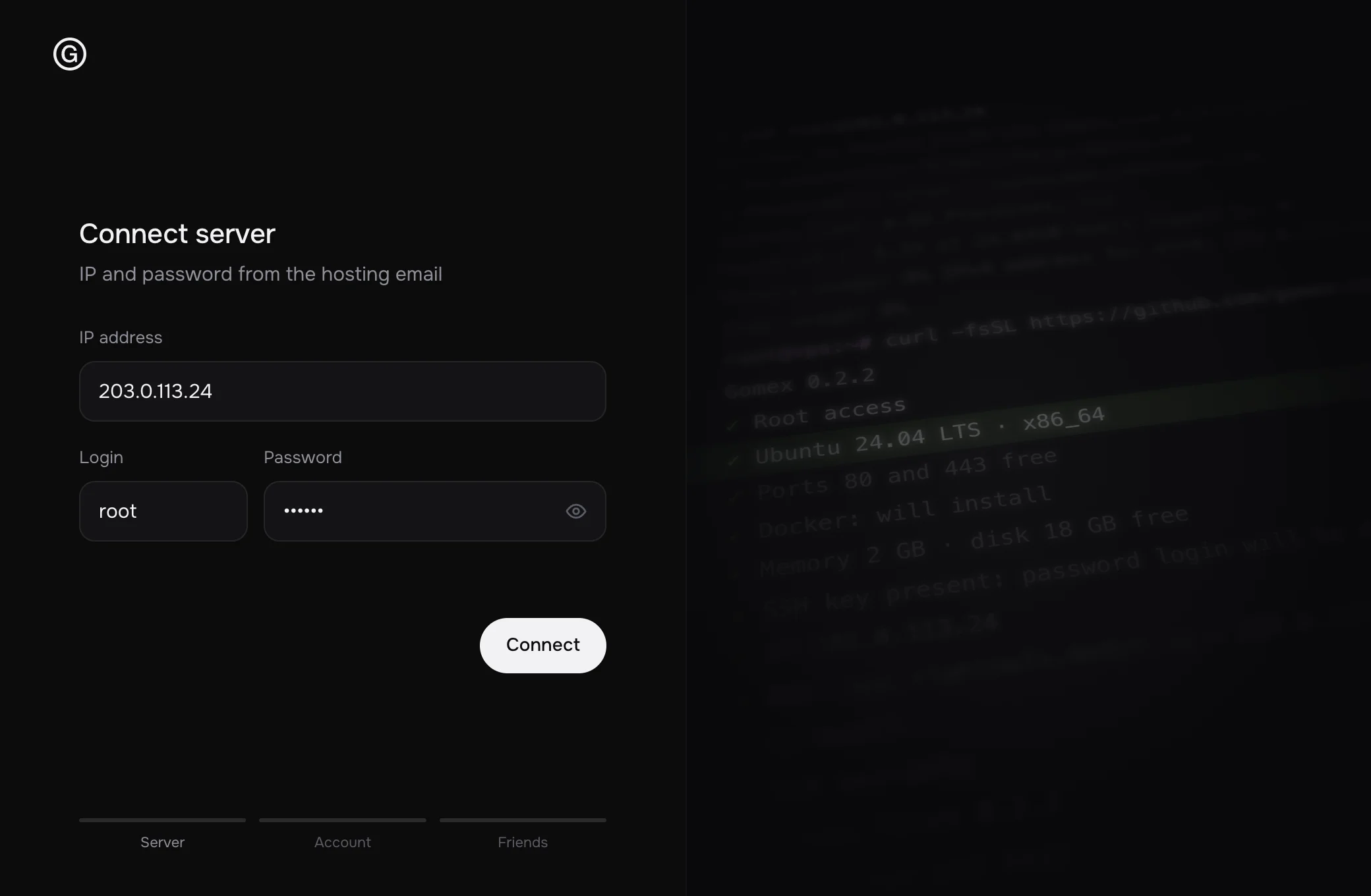
Atrium is a voice and chat app where each friend group runs its own server. The first installer was a terminal wizard. It was fine for me and a wall for the friend who actually sets the server up. So the setup moved into the desktop app: address, login and password, then the app installs everything, shows each step and ends on an invite link. The friends installed it without hints; their only question was which server address to type. The product did not change. The first ten minutes did.
A sidebar with no first step
A new Alloy workspace had no onboarding. A new user landed on a sidebar of thirteen sections, from Omni Hub and Staff to Variables, MCPs, Flows and Logs, and had to work out alone where an agent comes from. Alloy had no data on where people gave up. The product has a lot of features, and the interface didn’t say which one to touch first. I made the setup a conversation with Ally, the assistant every workspace already has: what to build first, a few questions about the business, and a last message that says the agent is live, with the code to paste on the website. The CEO and the CPO liked it. The point is not the chat. The point is that the first screen now asks one question and ends with a working agent.
A form that breaks in silence
On the nutritionist’s site the quiz worked, the result worked, and the contact form was losing every lead. I had launched with a third-party form service so I wouldn’t build a back end before there was demand. In August the analytics showed people choosing a messenger, typing their number, pressing Send and getting an error. Six people tried 21 times, and none of the requests arrived. Nobody complained; they just left. I built my own back end, and since 26 August every request has arrived. A broken step near the aha moment doesn’t look like a design problem on a screenshot. It only shows in the events.
The failing form was the clearest demand signal I got.
An answer nobody can check
Basetalk turns a manager’s question into SQL and returns a chart. A chat makes an answer easy to ask for; it still has to help a person decide whether the answer is right. So while it works, the assistant spells out what it understood: the metric, the filters, the grouping and the sort order, and it asks first when a request is ambiguous. LineGuard, which finds damaged parts in drone photos of power lines, shows a confidence score on every detection and lets the engineer outline what the model missed. In both, the aha moment is not the answer. It is the moment the person trusts the answer enough to act on it.
A feature nobody asked for
Plantify’s chatbot had scored second of twenty ideas at my desk. Eight interviews later it left the MVP: only one of eight people trusted AI advice outright, and five would trust it only on a condition they could check. AI stayed where its result can be checked, a camera that names the plant in front of you. A first task that people don’t want is not a first task.
How I find it in two weeks
Week one: an analytics event on every step to payment, so we see where new users drop, and 8 user interviews, which I run, so we hear why. Week two: the path to the first task, shipped in a branch of your code that your developer reviews, a keep-or-cut list for your features, and a test with 5 new users, their sessions recorded in PostHog for you to watch.
The goal is written down at kickoff, so we both know what counts: 5 new users reach their first task without help. If they don’t, I keep working for up to 2 more weeks for free. That is the Aha Sprint, and the cases above are why it is built the way it is.