A quiz funnel for a nutritionist: 8 leads and 2 clients from 73 visitors
What I built for an Instagram practice, what the first month showed and where people drop off now
· 4 min read · Nikita Miezhenski
Nadezhda Morozova is a nutritionist in Russia with close to 20,000 followers on Instagram. Before the site, she had no way to turn someone who liked a Reel into a booked call. In July 2026 I designed and built her a landing page, a health quiz, a lead panel and analytics, and I run one experiment on it every month. In the month after the contact form started working, 73 people came from Instagram, 8 left their contact details, and 2 of them paid, about $1,000 between them.
One path
The landing page has one path: the problem, the quiz, the result, a free call. Testimonials are real Telegram conversations, and visitors can open the channel and check them. Three prices lead into each other: a diagnostic session for about $50, a consultation with a plan for about $185, and three months of coaching for about $805. Most of the selling happens on the free 15-minute call, where Nadezhda looks at the situation and recommends one of them. Both first sales were decided on that call.
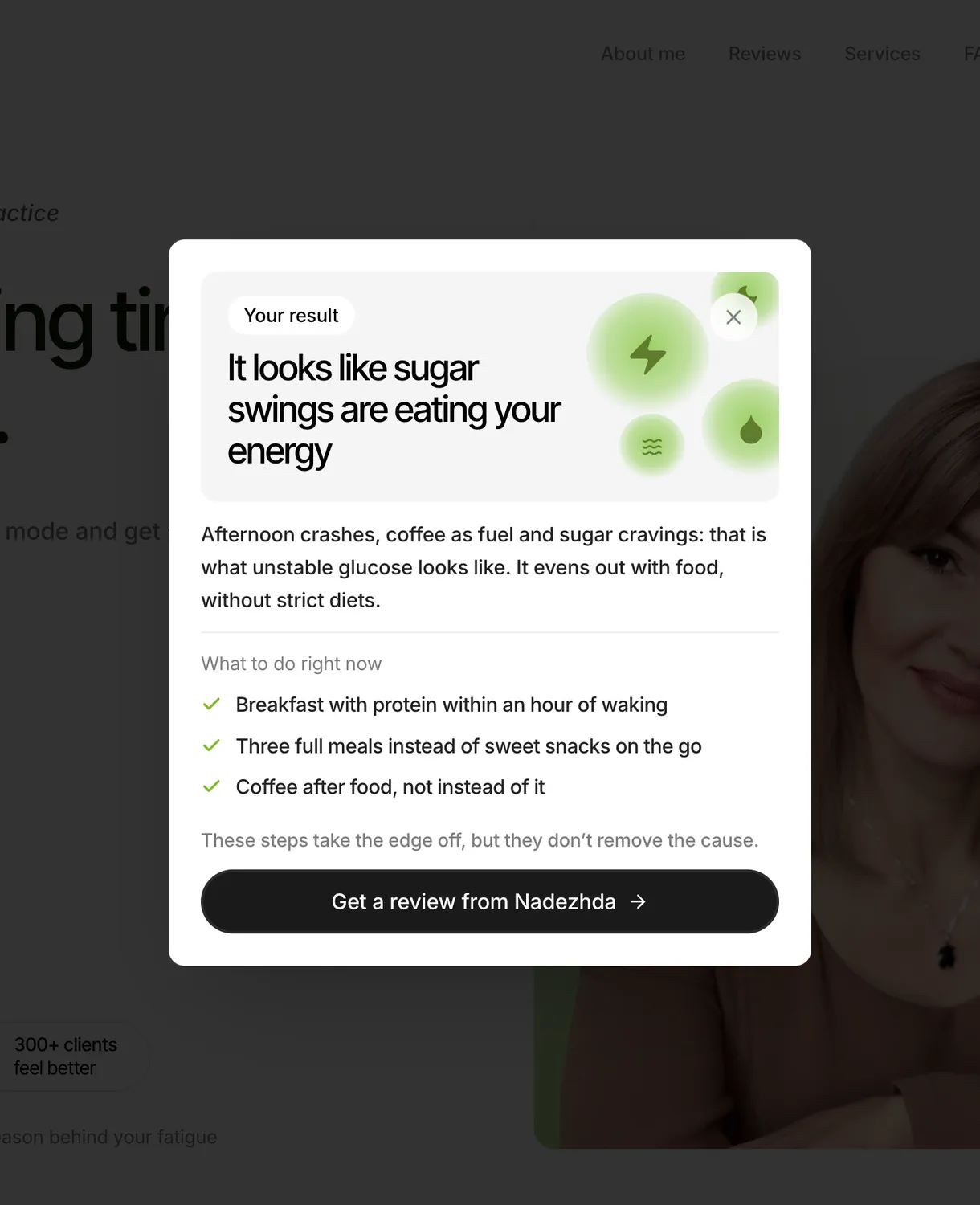
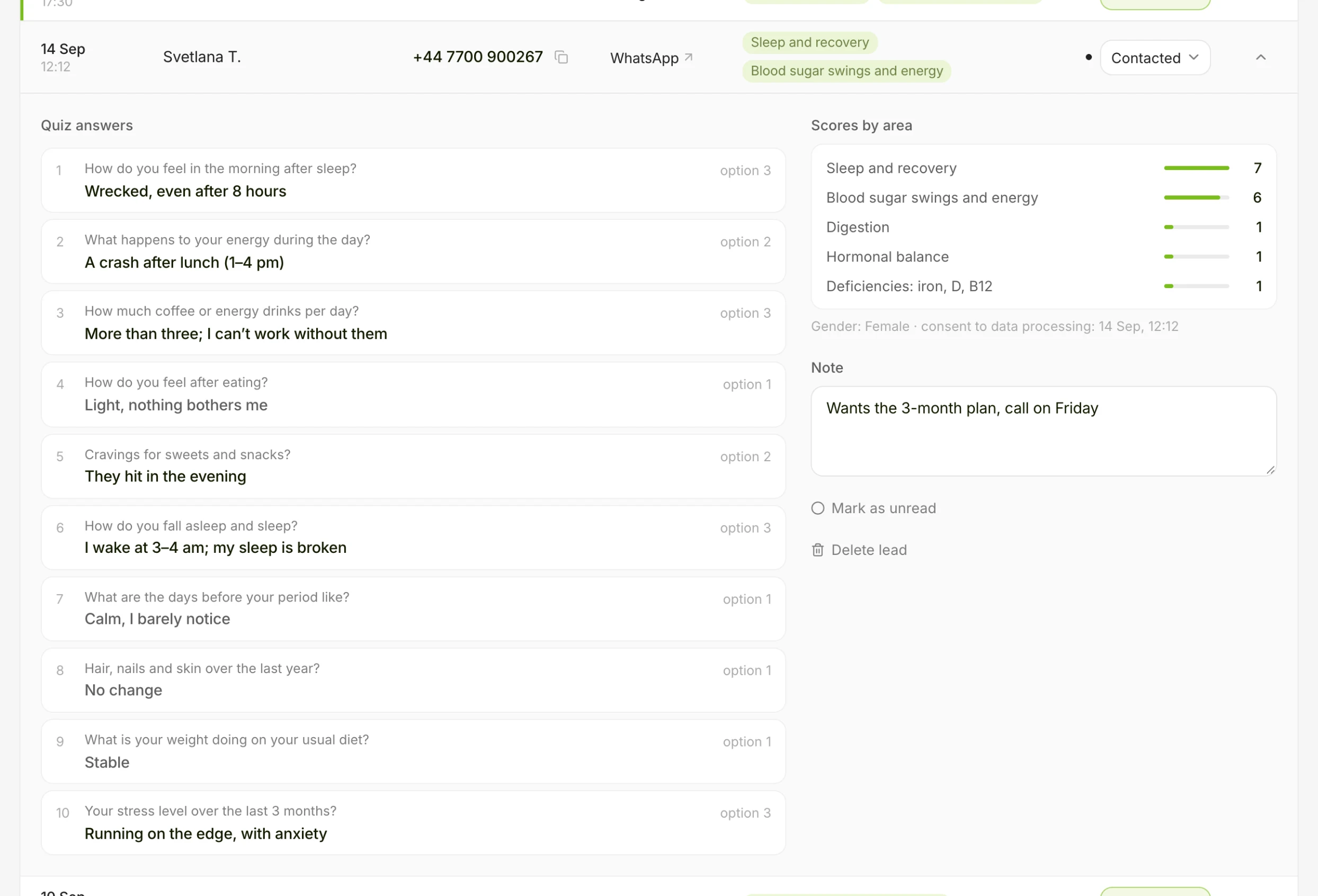
The quiz asks ten questions about how a person feels: mornings, energy through the day, coffee, digestion, cravings for sweets, sleep, the days before a period, hair and skin, weight and stress. Each answer adds weight to one or more of five areas: blood sugar and energy, sleep and recovery, digestion, hormonal balance, and deficiencies of iron, vitamin D and B12. The result names the area that scored highest in plain words, lists what to change right away, and only then asks for a phone number.
Every lead arrives in a small admin panel with the quiz answers, sorted by area. Nadezhda adds notes and sets a status: new, contacted or closed. PostHog records every step: section views, the quiz start and every answer, the result, the contact screen, the messenger choice and whether the form went through.
The first signal was false
At launch most visitors were friends and family testing the site. They clicked around, finished the quiz, looked at the result and left without a phone number. I assumed the order was wrong and that the quiz should ask for contacts before showing the result. Splitting traffic by source changed that: 70 direct visits from people I had sent the link to produced no leads, and every lead came from Instagram.
Filter out your own traffic before you trust any number.
The second finding was worse. I had launched with a third-party form service so I wouldn’t build a back end before there was demand. In August the analytics showed people choosing a messenger, typing their number, pressing Send and getting an error. Six people tried 21 times in total, and none of the requests arrived. I built my own back end, and since 26 August every request has arrived.
The third came from heatmaps: visitors read the pricing section and left, most likely unsure which tier fit them. I added a line under the tiers: “Not sure which one you need? Take the quiz or message me.” One of the first two paying clients came through that button.
Where people drop off now
From 26 August to 25 September, 82 people visited, 22 started the quiz, 18 finished it, 14 saw the contact screen, 8 sent their contacts and 2 paid. The contact screen is the next experiment: four in ten people who reach it leave without sending. Only 14 people a month get that far, too few to call a test in one month, so I’m waiting for more traffic before changing it.
Health data
The quiz asks about sleep, digestion and periods, which makes the answers health data. The form sends nothing until the person agrees to the processing of their personal data. Analytics stays off until the visitor accepts cookies. Names, phone numbers, quiz answers and notes are encrypted in the database, and the admin panel asks for a password and a one-time code. None of this is visible on the page, and all of it is part of why a practice can put its name on it.
PostHog counts only visitors who accepted cookies, and my own visits are filtered out, so real traffic is higher. Payments are recorded by the practice. Dollar amounts are converted from roubles at the Central Bank of Russia rate on 28 October 2026.
What I’d tell another practice: a cheap entry offer and a free short call sell the long programs better than the page does on its own. Build less before demand is proven, but watch closely what breaks.